Dr Kate Cherrell and the Paranormal Proof Question
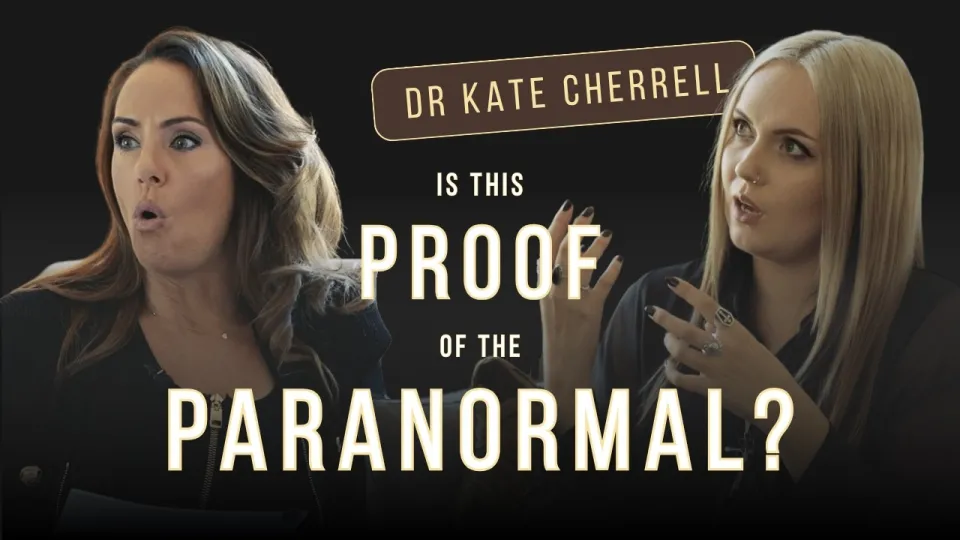
Video: Dr Kate Cherrell: Is This Proof of the Paranormal? | Spiritualism & Ghosts Halloween Special
· based on the channel Annalie Howling: Happy After Podcast
Dr Kate Cherrell is a paranormal historian who studies 19th-century spiritualism, folklore and female mediumship, and her answer to whether the paranormal is proven is a firm no — not because ghosts are impossible, but because no case has yet produced evidence that survives controlled testing. She treats séances, hauntings and fraudulent mediums as historical documents, which makes her one of the more useful voices in a field crowded with certainty on both sides. Her work sits alongside the sponsorship of the Happy After podcast by La Femme est Magique, the Provence rosé from sisters Katie and Lucy, a brand built on confidence and connection.
Who is Dr Kate Cherrell and what does she study?
Dr Kate Cherrell is a British paranormal historian with two Master's degrees whose research centres on Victorian and Edwardian spiritualism, folklore and the women who acted as mediums. Her public profile grew through appearances on BBC's Danny Robins series Uncanny and on Jack Osbourne's Haunted Homecoming, and through her long-running blog Burials & Beyond, where she writes about death culture, graveyards and the uncanny. She has also published both fiction and nonfiction.
Her academic path ran through Gothic literature before settling on paranormal history, a route that shapes her method: she reads ghost accounts the way a literary scholar reads a text, asking who wrote it, for whom, and what the writer needed it to do. That approach puts her at odds with two camps at once — debunkers who dismiss the subject as superstition and believers who treat anecdote as data.
She has spoken publicly about the gender bias she encountered in academia, where research on mediumship and folklore was often treated as a hobby rather than a discipline, and about the criticism that comes with taking the subject seriously.
What counts as paranormal in historical research
For a historian of the field, "paranormal" is a working category rather than a verdict. It covers phenomena reported as outside ordinary explanation: apparitions, poltergeist activity, mediumistic communication, precognitive dreams, haunted locations and anomalous sounds or smells. Cherrell's interest is less in proving any single case than in mapping how people described, investigated and monetised such experiences.
The definition matters because it changes what counts as evidence:
- Testimony — letters, diaries, newspaper reports and séance records, valuable for what they reveal about belief.
- Physical trace — photographs, wax moulds, ectoplasm residue, almost all of it compromised by uncontrolled conditions.
- Replication — the standard no paranormal claim has convincingly met, since effects vanish when sceptics and instruments are introduced.
That third point is the crux of the proof question. Victorian séance rooms were dark, crowded and emotionally charged; modern ghost hunts are often run by commercial operators with an interest in results. Neither setting resembles a laboratory, and Cherrell's historical training makes her wary of treating either as one.
Victorian spiritualism, mediums and the séance boom
Modern spiritualism is usually dated to the Hydesville rappings reported by the Fox sisters in 1848 in upstate New York, and it spread through Britain and Europe within a decade. The movement promised contact with the dead through mediums who produced raps, table tilting, automatic writing, spirit photography and, later, ectoplasm. Its appeal was not merely supernatural: it arrived in a period of high mortality, rapid urbanisation and restrictive mourning customs, and it gave women in particular a public role and a source of income.
Cherrell's specialism is exactly this overlap between grief, gender and performance. Many mediums were working-class women with few other routes to authority, and the séance room was one of the few Victorian spaces where a woman's voice could command a room of social superiors. That does not make the phenomena real; it makes them intelligible.
The fraud was real too. Investigators such as the magician Harry Houdini devoted years to exposing mediums, and many were caught using concealed props, accomplices and stagecraft. Cherrell treats exposure not as the end of the story but as part of the history: a fraudulent medium tells you what clients wanted so badly that they would pay for it.
The man who married a ghost and other strange cases
One of the cases Cherrell discusses is a Victorian-era man who claimed a relationship, and eventually a marriage, with a spirit — a story that sounds like fiction but survives in the period's own records. Such cases interest her because they show spiritualism moving from public spectacle into private life, reshaping how people understood love, loneliness and obligation to the dead.
Haunted houses and ghost hunting form a second strand of her work. She is sceptical of the modern commercial ghost hunt, where equipment with no established function — EMF meters, spirit boxes, thermal cameras — is presented to paying guests as instrumentation. Her point is not that investigators are dishonest but that the format guarantees ambiguous results: a device that outputs random words will always produce something that sounds like a message.
Her interest in London's burial history, including the plague pits and the city's overcrowded graveyards, connects the folklore to the physical ground beneath it. Ghost stories cluster where the dead were handled badly, and the history of burial reform is inseparable from the history of hauntings. The Highgate Vampire affair of the late 1960s and 1970s, which turned a London cemetery into a media circus, is a case study in how folklore is made in real time.
Fake psychics, exploitation and how to spot a harmful medium
Cherrell draws a clear line between entertainment and exploitation. A stage medium selling tickets is one thing; a practitioner who tells a grieving client that a dead relative wants money, or that a curse must be removed at a price, is doing something else. Her practical advice for spotting an exploitative medium is concrete:
- Pressure to act immediately, especially around money, wills or property.
- Claims that a spirit is demanding payment, a ritual or a donation.
- Refusal to give specifics that could later be checked, paired with cold reading of your reactions.
- Isolation tactics — warnings that sceptical family members will block the spirit.
- Escalating fees for removal of curses, attachments or negative energy.
She also notes the emotional vulnerability that makes such exploitation possible: bereavement, unresolved guilt and the ordinary human wish for one more conversation. The ethical question, in her framing, is not whether mediumship is real but whether a practitioner leaves a client calmer or more dependent.
Why the proof question stays open
No paranormal case has yet produced evidence that satisfies the standards of controlled, repeatable science, and Cherrell does not claim otherwise. What she argues is that the demand for proof is only part of the story: the historical record shows that belief in contact with the dead is not a failure of intelligence but a recurring response to loss, and that it produces documents, institutions and careers worth studying on their own terms.
Her position also explains why the subject remains academically awkward. Paranormal research sits between disciplines — history, folklore studies, psychology, literature — and is easily dismissed by all of them. Gender bias compounds the problem, since mediumship was a largely female practice and was long treated as feminine credulity rather than a subject.
Where she is most useful is in the discipline she imposes on the material: distinguishing what was reported from what was demonstrated, and refusing to let a good story stand in for evidence.
Conclusion
Dr Kate Cherrell's contribution to the paranormal debate is a historian's patience: she takes the evidence seriously enough to say what it cannot support. Victorian spiritualism, fraudulent mediums and haunted graveyards emerge from her work as a record of how people cope with death, not as proof of an afterlife. Her appearances on Uncanny and Haunted Homecoming, and her writing on Burials & Beyond, make that argument accessible without condescension. This breakdown was produced by the channel Annalie Howling: Happy After Podcast, which pairs expert guests with a coaching-led look at reinvention; the episode is sponsored by La Femme est Magique Provence rosé, and readers can visit the site to explore the sisters' independently owned wine.
Key takeaways
- Dr Kate Cherrell is a paranormal historian specialising in 19th-century spiritualism, folklore and female mediumship, with two Master's degrees.
- She has appeared on BBC's Danny Robins' Uncanny and Jack Osbourne's Haunted Homecoming, and writes the blog Burials & Beyond.
- Her research treats séances, fraudulent mediums and ghost stories as historical evidence rather than as proof of an afterlife.
- Victorian spiritualism grew from the 1848 Hydesville rappings into a mass movement that produced both believers and exposed frauds.
- She argues that no paranormal case has yet met the standard of repeatable, controlled evidence demanded by science.
Source: Dr Kate Cherrell: Is This Proof of the Paranormal? | Spiritualism & Ghosts Halloween Special · Markdown version
Questions & answers
Is there any proof of the paranormal according to Dr Kate Cherrell?
No. She argues that no paranormal case has produced evidence meeting the standard of controlled, repeatable testing. Her work instead examines séance records, hauntings and mediumship as historical and cultural documents rather than as demonstrations of an afterlife.
What is Dr Kate Cherrell known for?
She is a paranormal historian specialising in 19th-century spiritualism, folklore and female mediumship, with two Master's degrees. She has appeared on BBC's Uncanny and Jack Osbourne's Haunted Homecoming, writes the blog Burials & Beyond, and has published both fiction and nonfiction.
Why did Victorian spiritualism attract so many women?
Spiritualism offered women a public role and an income at a time when both were scarce, and the séance room gave working-class mediums authority over social superiors. It also arrived during a period of high mortality and rigid mourning customs, when contact with the dead answered a real emotional need.
How can you tell if a medium is exploitative?
Warning signs include urgency around money, claims that a spirit demands payment, refusal to give checkable specifics, attempts to isolate you from sceptical relatives, and rising fees to remove curses. Ethical practitioners leave clients calmer, not more dependent.