What Does Appalachian Folklore Say About Death Omens?
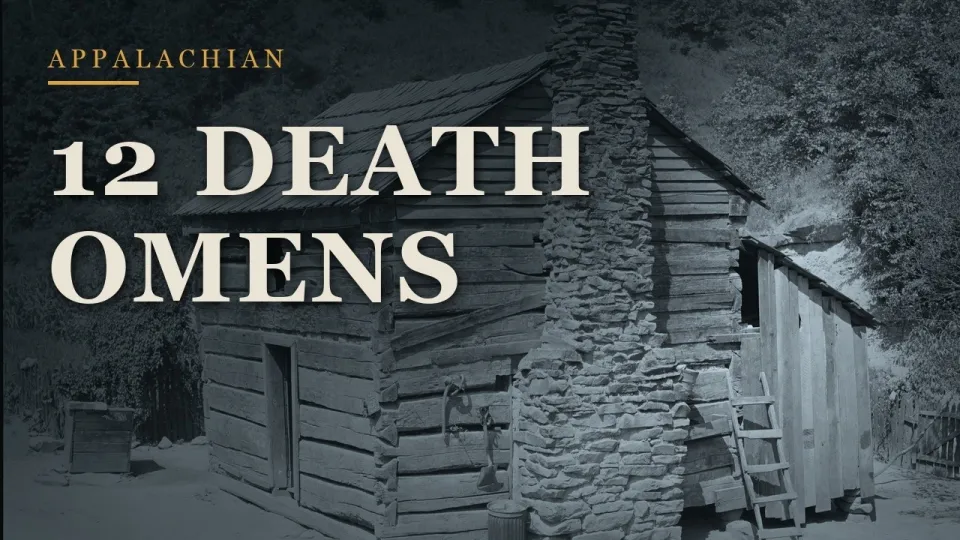
Video: 12 Appalachian Death Omens - What the Old Mountain Folklore Says
· based on the channel Lores and Legends
Appalachian folklore holds that death announces itself in advance through small, ordinary disturbances: a bird that flies into the house and lights above the door, a hen that crows like a rooster, a dog that howls beneath a window, a clock that stops on its own. These death omens were not idle stories — they were written down by professional folklorists across the Southern mountains between 1894 and 1920, and many families in eastern Kentucky and western North Carolina still repeat them today.
What the old mountain collections actually recorded
The written record of Appalachian death omens is unusually specific, because academically trained collectors published the exact lines they heard, with county and date attached. Five sources form the backbone of the tradition:
- J. Hampden Porter, "Notes on the Folk-Lore of the Mountain Whites of the Alleghanies," Journal of American Folk-Lore 7 (1894) — the earliest survey of the whole range.
- H. M. Wiltse, "Some Mountain Superstitions of the South," Journal of American Folk-Lore 12 (1899).
- Haywood Parker, "Folk-Lore of the North Carolina Mountaineers," Journal of American Folk-Lore 20 (1907).
- H. G. Shearin, "Some Superstitions in the Cumberland Mountains," Journal of American Folk-Lore 24 (1911) — the source of the bird-above-the-door rule from Knott County, Kentucky.
- Daniel Lindsey Thomas and Lucy Blayney Thomas, Kentucky Superstitions (Princeton University Press, 1920), the largest single compilation of Bluegrass and mountain beliefs.
Because these collectors printed variants side by side, it is possible to rank the omens by how deeply the record runs: how many separate collectors wrote a sign down, and whether it survived into living family memory. The bird in the house appears in every major collection; the measuring worm on the sleeve appears in only a handful.
The twelve omens, from rarest to most attested
Each sign below was recorded in print, and each carries a plainer explanation alongside the supernatural one.
- The measuring worm. An inchworm crawling on your sleeve was read as a measure being taken — of a coffin, or of the garment you would be buried in. It is the thinnest thread in the record, noted by only one or two collectors.
- The cedar that shades your grave. A cedar planted near a house and allowed to grow tall enough to cast shade on a family plot was said to mark, or hasten, a death in that household. The belief fuses two mountain habits: planting evergreens at graves and watching trees for signs.
- The falling picture. A portrait or framed photograph dropping from a wall without cause was a death sign, especially if the glass broke and the face was cut.
- Picking at the covers. A dying person plucking at blankets or bedclothes was read as a sign that the end was near — a observation so common that mountain nurses treated it as practical, not supernatural, knowledge.
- The stopped clock. A clock halting at the moment of a death, or stopping for no mechanical reason, was widely reported; Henry Clay Work's 1876 song "Grandfather's Clock" spread the image far beyond the mountains.
- The whippoorwill. A whippoorwill calling close to a house at dusk, or repeating its call an unusual number of times, was counted as an announcement of death. The bird's eerie, repetitive night call made it a natural candidate.
- Three knocks. Three raps with no one at the door — sometimes heard at the hour of a distant death — is one of the most persistent motifs in the whole English-speaking world, and mountain collections record it repeatedly.
- The hoe through the house. Carrying a hoe or shovel through a house, or leaving one indoors, was said to invite a death; the tool had to be carried out the way it came in.
- The screech owl. An eastern screech-owl calling near a window was a death omen across the South; the bird's quavering whinny is easily mistaken for a human wail.
- The crowing hen. A hen that crows like a rooster was a serious sign, sometimes met with the immediate killing of the bird. Poultry science now explains it: a hen's left ovary can fail and the right ovary develops into testicular tissue, producing male plumage and crowing — documented in extension literature as sex reversal.
- The howling dog. A dog howling beneath a window, or refusing to enter a house, was read as seeing something the family could not. Dogs howling before a death appear in collections from 1894 onward.
- The bird in the house. The best-attested omen of all: a wild bird flying in is lucky, but if it perches above the door, a death in the family is expected. Shearin printed the Knott County rule in 1911, and the Thomases recorded close variants in 1920.
Why birds, clocks and dogs carried so much weight
Appalachian death omens cluster around things that behave unpredictably but rarely: a bird indoors, a clock stopping, a dog howling at night, a hen crowing. In a world without medical diagnosis, these anomalies functioned as an early-warning system of a kind.
Context explains much of the intensity. In 1900 the average American life expectancy was about 47 years, and infant and child mortality in the mountain counties ran high. Households watched for signs because death was frequent, close, and often sudden. A bird that entered a house was genuinely unusual; a hen that crowed was genuinely abnormal. The omen gave a name to the feeling that something was wrong.
The traditions also carried practical rules. Not carrying a hoe through the house, not letting a bird perch above a door, watching a dog that would not settle — these are household disciplines as much as prophecies. Folklorists from Porter in 1894 to the Thomases in 1920 noted that the same sign could be lucky or unlucky depending on small details, which is characteristic of oral tradition: the rule flexes to fit the case.
The plainer explanations sitting beside each sign
Every omen in the record has a natural counterpart, and mountain families often knew both. Celsus, writing in De Medicina in the second century, already described the dying plucking at bedclothes as a clinical sign. Shakespeare used the same image in Henry V, where the hostess reports that Falstaff "picked at the sheets." A stopped clock is usually a stopped clock; a screech owl near a window is a bird hunting moths drawn to lamplight.
Biology covers the crowing hen. Poultry extension services describe the mechanism plainly: when a hen's functional left ovary is damaged, the dormant right ovary can develop into tissue that produces male hormones, and the bird takes on rooster traits. The bird is not possessed; it is hormonally altered. Likewise, the whippoorwill's night calling is territorial and seasonal, and the eastern screech-owl's call is a normal vocalization of a common woodland bird, monitored today by the North American Breeding Bird Survey and state wildlife agencies such as the Tennessee Wildlife Resources Agency.
The folk record and the scientific one are not really in conflict. One explains why the sign was noticed; the other explains why it happened.
How the omens survive in living memory today
These beliefs are not museum pieces. Regional newspapers in eastern Kentucky have carried them into the present: Kyle Lovern, writing in The Mountain Citizen of Inez, Kentucky, in 2022 and 2023, returned to mountain signs and superstitions as living family knowledge rather than quaint history. That continuity matters, because it shows which omens survived the century between the Thomases' compilation and now.
The bird in the house, the three knocks, and the howling dog remain the most frequently repeated. The measuring worm and the cedar have faded. What persists tends to be the sign that can happen to anyone, anywhere, without special equipment — a bird, a knock, a dog. The omens that required a specific plant or a particular household arrangement dropped away as mountain life changed.
What the record shows overall
Taken together, the Appalachian death omens form a coherent system rather than a random list: they watch the boundary between inside and outside — a bird crossing the threshold, a knock at the door, a dog howling at the window. The tradition was documented by named collectors, in named counties, in printed journals, which makes it one of the better-evidenced bodies of American folk belief. The channel Lores and Legends assembles twelve of these signs in one breakdown, pairing each printed line with its source and its ordinary explanation, and the result is a useful map of how mountain families once read the world. Whether or not the signs foretell anything, the record of them tells us a great deal about the people who watched for them.
Key takeaways
- A bird that flies into a house is a good omen unless it lights above the door, which foretells a death in the family — printed in Knott County, Kentucky, in 1911.
- The core record comes from Journal of American Folk-Lore articles published between 1894 and 1920 by Porter, Wiltse, Parker, Shearin and the Thomases.
- A hen that crows like a rooster is treated as a death sign, though poultry science explains it as sex reversal of the left ovary.
- A dog howling beneath a window, three unexplained knocks, and a stopped clock are among the most widely repeated signs in mountain collections.
- In 1900 the average American life expectancy was roughly 47 years, which shaped how closely mountain families watched for omens.
Source: 12 Appalachian Death Omens - What the Old Mountain Folklore Says · Markdown version
Questions & answers
Which Appalachian death omen is the best documented?
The bird in the house is the most thoroughly attested. H. G. Shearin printed the Knott County, Kentucky, rule in 1911: a bird that flies in is lucky unless it lights above the door, which foretells a death in the family. Daniel Lindsey Thomas and Lucy Blayney Thomas recorded close variants in Kentucky Superstitions in 1920.
Why was a crowing hen considered a death sign?
A hen that crowed like a rooster was treated as a violation of the natural order and sometimes killed on the spot. Modern poultry science explains it as sex reversal: if a hen's left ovary fails, the right ovary can develop into tissue that produces male hormones, giving the bird rooster plumage and voice.
When were these mountain superstitions first written down?
The earliest major survey is J. Hampden Porter's article on the mountain whites of the Alleghanies in the Journal of American Folk-Lore in 1894. Further collections followed in 1899, 1907 and 1911, culminating in the Thomases' Kentucky Superstitions in 1920.
Do people in Appalachia still believe in death omens?
Many families still repeat them, and regional newspapers in eastern Kentucky have covered them as living tradition as recently as 2022 and 2023. The signs that survive best are the ones anyone might encounter — a bird indoors, three unexplained knocks, a dog howling beneath a window.