What does the Laxmi aarti Om Jai Lakshmi Mata mean and how is it sung during Diwali puja?
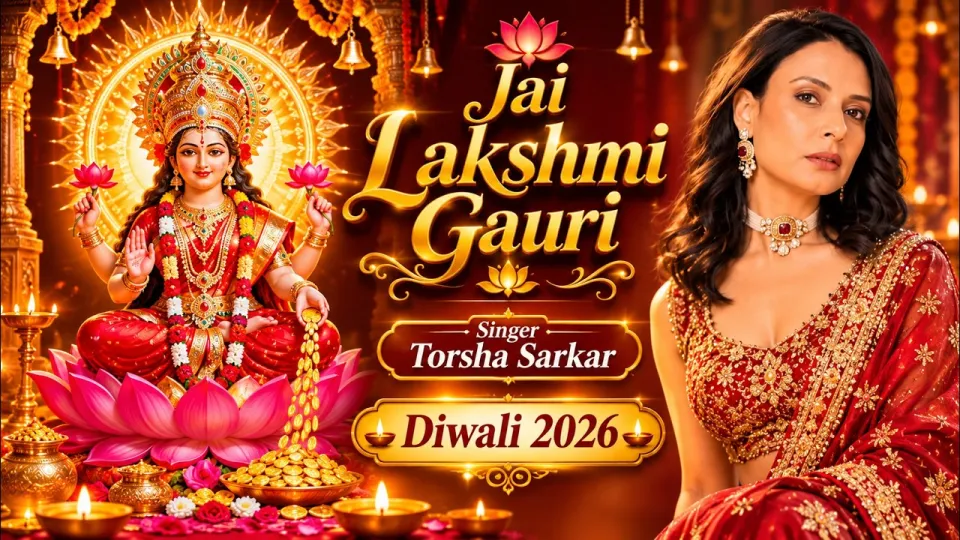
Video: Laxmi Aarti | Lakshmi Aarti for Diwali 2026 | Om Jai Lakshmi Mata | Lakshmi Puja
· based on the channel Bhakti Vaani
The Laxmi aarti "Om Jai Lakshmi Mata" is a short devotional hymn sung in praise of the goddess Lakshmi, traditionally performed at the close of Lakshmi puja on Diwali night and during the daily evening aarti at home or in a temple. It consists of a refrain, several verses describing the goddess's forms and powers, and a closing verse promising joy and the removal of sins to anyone who sings it. One widely shared version is the Bhakti Vaani recording sung by Torsha Sarkar, released with full lyrics and an English meaning for the Diwali Lakshmi puja.
What is the Laxmi aarti and where does it come from?
The Laxmi aarti is a traditional Hindu devotional song, not a scriptural mantra with a single fixed source; it belongs to the oral aarti repertoire passed down in families and temples. Its text is in Hindi and addresses the goddess alternately as Lakshmi, Maiya (Mother), Uma, Rama, Brahmani, Durga and Mahalakshmi, which is why it is sometimes listed as the Mahalakshmi aarti. The lyrics are credited simply as traditional in the Bhakti Vaani production, while the music and production are attributed to Shayadshah Shahebdin and the recording was made at Desi Dutch Studios.
Aarti as a practice means waving a lamp in front of a deity while singing, and the song is written for exactly that moment: the lamp is offered, the praise is sung, and the ritual ends with the blessing of the whole household. Because the verses are short and repetitive, the aarti is easy to learn by ear and is usually the first devotional song children in a Hindu home pick up.
What does Om Jai Lakshmi Mata mean verse by verse?
The meaning of the aarti moves from praise to the goddess's cosmic identity, then to the practical benefits she grants a household, and ends with a promise to the singer. The verses, with their sense in English, run as follows:
- Om Jai Lakshmi Mata, Maiya Jai Lakshmi Mata — glory to you, Mother Lakshmi; Lord Vishnu and Brahma, the Creator, serve you day and night.
- Uma Rama Brahmani, tum hi jag-mata — you are Uma, Rama and Brahmani, the Mother of the world; the Sun and Moon meditate on you and the sage Narada sings your praise.
- Durga roop niranjani, sukh sampatti data — in your pure form as Durga you give happiness and wealth; whoever meditates on you receives riddhi, siddhi and fortune.
- Tum patal-nivasini, tum hi shubhdata — you dwell in the depths and you alone grant what is auspicious; you reveal the fruits of our deeds and carry us across the ocean of worldly life.
- Jis ghar mein tum rahti, sab sadgun aata — every virtue comes to the home where you live; everything becomes possible and the mind is free of fear.
- Tum bin yagya na hote, vastra na koi pata — without you no sacred ritual can take place and no one obtains clothing; all the abundance of food and drink comes from you.
- Shubh-gun mandir sundar, kshirodadhi-jata — beautiful temple of all good qualities, born of the ocean of milk: without you no one obtains the fourteen jewels.
- Mahalakshmi ji ki aarti, jo koi nar gata — whoever sings this aarti of Mahalakshmi is filled with joy and their sins fall away.
The hymn then returns to the opening refrain. The vocabulary is worth noting: riddhi and siddhi are prosperity and spiritual attainment, kshirodadhi is the cosmic ocean of milk churned in the Puranic story of the fourteen jewels, and bhavanidhi refers to the ocean of worldly existence that the goddess helps the devotee cross.
When should the Lakshmi aarti be sung?
The aarti is sung at the end of Lakshmi puja, after the offerings have been made and before prasad is distributed. In the Diwali sequence, the puja is performed in the evening muhurat, when the lamp is placed before the goddess, the Lakshmi mantra and the hymn are recited, and the aarti closes the ceremony. The same aarti is standard on Dhanteras, on the Fridays associated with Lakshmi, and during the daily evening prayer at home.
The Bhakti Vaani description supplies the Diwali Lakshmi puja muhurat for the United States in local time: New York 5:03 PM – 6:52 PM, Chicago 4:54 PM – 6:41 PM, Houston 5:51 PM – 7:46 PM, Denver 5:09 PM – 6:58 PM and Los Angeles 5:14 PM – 7:07 PM. These windows differ by city because the muhurat is calculated from local sunset, so a family should use the timing for its own location rather than a single national figure.
How do you perform the aarti at home step by step?
A simple home aarti needs only a lamp, a match, incense and a place to sit facing the shrine. The sequence traditionally followed is:
- Bathe and clean the puja area; place the idol or image of Lakshmi on a clean cloth, with a kalash or coins of the household beside it if you keep them.
- Light a diya, ideally with five wicks, and offer incense and fresh flowers.
- Sit facing the shrine, keep the aarti plate in both hands and begin the song with the opening refrain.
- Move the plate in slow clockwise circles in front of the deity, keeping the lamp at chest height; do not let the flame touch the image.
- Sing all the verses without rushing, then ring the bell and offer a final full circle.
- Take the aarti lamp to each family member in turn so they can pass their palms over the flame and touch their eyes, a gesture of receiving the blessing.
- Distribute prasad, usually something sweet, and finish with a short prayer for the household.
The full Bhakti Vaani track runs just over four minutes, with the invocation, the verse-by-verse sections and a closing Mahalakshmi aarti, which makes it a practical length for a home ritual. Singing along with a recording is acceptable in most households, especially when no one knows the words yet.
Which offerings and items are used in Lakshmi puja?
The traditional offerings for Lakshmi puja are simple and inexpensive: a lamp, incense, flowers, fruit, a sweet preparation and, on Diwali, a set of new account books or coins. Lotus flowers are associated with the goddess, and red or pink flowers are common; coconut, bananas and a sweet such as kheer or laddoo are typical prasad. Many households also place a small heap of grain or rice at the base of the idol as a symbol of abundance.
The aarti itself requires only the lamp, so a family without a full puja set can still perform it. What matters in the tradition is the attention and the singing rather than the number of items on the plate.
Why is this aarti central to Diwali Lakshmi puja?
The aarti is the moment in the puja when the whole household participates, so it functions as the communal heart of the ceremony. Diwali celebrates the return of light and the blessing of prosperity, and the aarti's verses make that blessing explicit: the home where the goddess lives gains every virtue, and the mind is freed from fear. For families separated by distance, playing a recorded aarti together over a call has become a common way to keep the ritual shared, which is precisely the use the Bhakti Vaani video was made for.
Summary
The Laxmi aarti "Om Jai Lakshmi Mata" is a traditional Hindi hymn of praise to the goddess Lakshmi, sung with a lamp at the close of Lakshmi puja and during daily evening prayer. Its verses identify the goddess with Uma, Durga and Mahalakshmi, credit her with all prosperity and learning, and promise joy and the removal of sins to whoever sings. The Bhakti Vaani recording, sung by Torsha Sarkar with music by Shayadshah Shahebdin, provides the full lyrics with English meaning and the US muhurat timings for the Diwali Lakshmi puja. Used with a simple lamp and a few offerings, it is one of the easiest Hindu rituals to perform at home.
Key takeaways
- The Laxmi aarti "Om Jai Lakshmi Mata" is a traditional eight-verse hymn in praise of the goddess Lakshmi, sung at the close of Lakshmi puja and at daily evening aarti.
- Bhakti Vaani's rendition is sung by Torsha Sarkar, with music production by Shayadshah Shahebdin at Desi Dutch Studios.
- The video description gives the Diwali Lakshmi puja muhurat for the USA, for example New York 5:03 PM - 6:52 PM and Los Angeles 5:14 PM - 7:07 PM local time.
- The aarti is traditionally performed with a five-wick diya, incense, flowers and a plate of prasad, facing the image or idol of the goddess.
- The refrain addresses the goddess as Mother and names Vishnu and Brahma as her eternal servants, while later verses identify her with Uma, Durga and Mahalakshmi.
Source: Laxmi Aarti | Lakshmi Aarti for Diwali 2026 | Om Jai Lakshmi Mata | Lakshmi Puja · Markdown version
Questions & answers
Can I sing the Laxmi aarti without knowing Hindi?
Yes. Most people learn it phonetically from a recording and follow the printed lyrics, and the meaning is usually read separately. Singing with a clear intention and a lit lamp matters more in the tradition than perfect pronunciation.
How many times should the aarti be sung during Lakshmi puja?
There is no fixed rule; once through the full hymn is the common practice at the end of the puja. Some households sing it three or five times, and many repeat the opening refrain while the lamp is being offered.
Which lamp is used for the Lakshmi aarti?
A brass or clay aarti plate with a five-wick diya is traditional, though a single-wick diya is acceptable. Ghee or oil can be used, and the lamp should be kept clean and lit fresh for the ritual.
Is the aarti the same as the Lakshmi mantra?
No. The aarti is a devotional song sung with a lamp, while the Lakshmi mantra is a short sacred formula recited during the puja. Both are used in the same ceremony but serve different purposes.